
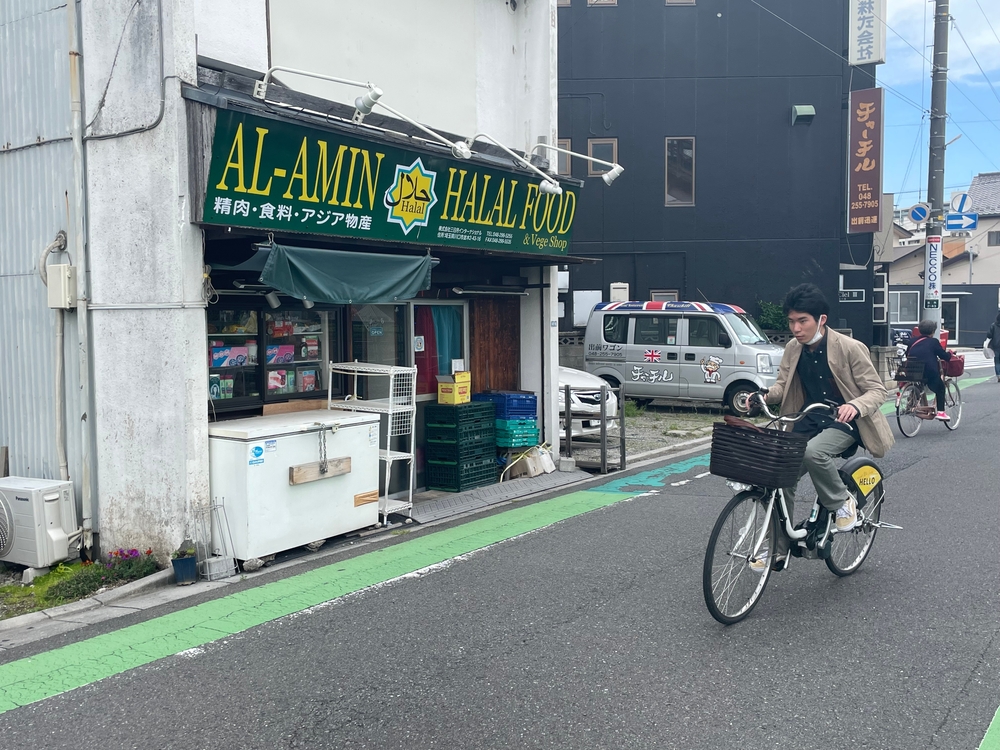
Local disputes in Japan over Muslim burial grounds, mosques, and religious accommodation are increasingly being amplified beyond Japan, becoming part of a broader transnational ecosystem of far-right and extremist narratives. Far-right actors and influencers outside Japan pick up, translate, and amplify these local controversies, reframing them as evidence that Japan is facing the threats of “Islamization,” demographic replacement, and cultural displacement that they claim are unfolding across Europe and North America.
A recent controversy over Muslim burial practices illustrates how this process unfolds. An X account based in the United States circulated a video of Mizuho Umemura, a lawmaker in Japan’s upper house and a member of the far-right populist party Sanseito, declaring that Japan was a “cremation country” and opposing the allocation of additional land for Muslim burials. The video received 228,000 likes and was viewed 12.8 million times.

Another X account, based in India, circulated a video in which a Japanese speaker falsely claimed that 224 Pakistanis had created a “no-go zone” in Ebetsu, Hokkaido Prefecture, on Japan’s northernmost main island. The video received 18,000 likes and was viewed 294,000 times. British far-right leader Tommy Robinson reposted the video, demanding that the Pakistanis be removed from Japan.

Japanese nationalist accounts, in turn, contribute to a transnational fusion of anti-Muslim narratives by recirculating overseas reactions as evidence of international support for their views while importing images and videos from Europe as warnings of a future Japan must avoid.
This transnational convergence of anti-Muslim narratives has unfolded alongside Sanseito’s own efforts to expand its international outreach. In 2025, the party established an international division and pursued contacts with figures in Donald Trump’s political orbit and the European far right. Efforts included hosting American conservative activist and Turning Point USA founder Charlie Kirk at a Tokyo event, as well as organizing a meeting with Tino Chrupalla, co-leader of Germany’s far-right party Alternative for Germany (AfD).
Domestic Disputes Supply the Material
In Japan, domestic tensions have emerged as the country’s Muslim population has grown, while still accounting for only a small share of the overall population. In 2024, Japan’s Muslim population was estimated at 420,000, around 0.3% of the total population, but nearly four times larger than two decades earlier. Indonesians constitute the largest community, numbering approximately 200,000, followed by Bangladeshis, Pakistanis, Malaysians, and Turks.
This growth has exposed gaps in institutions designed for a less religiously diverse society. Burial is the clearest example. Islamic practice generally prohibits cremation, but 99.97% of deaths in Japan resulted in cremation in 2018. Only around a dozen cemeteries nationwide can accommodate Muslim burials. At the same time, only around 160 mosques were operating nationwide by mid-2025—a shortage that compounds the problem, since the janazah, the funeral prayer performed before a burial, is typically performed at a mosque. A grieving party without local access to a mosque could thus face barriers at both stages of burying a loved one.
Proposals to create burial space have consequently become political flashpoints. Miyagi Prefecture, northeast of Tokyo, abandoned a plan to develop one after local mayors opposed it. A long-negotiated cemetery project in Hiji, Oita Prefecture, on the southern island of Kyushu, was stalled after the election of an opposing mayor. Another project, coordinated through a Buddhist temple in Sakuragawa, Ibaraki Prefecture, northeast of Tokyo, was withdrawn following local objections.
Mosques have encountered similar opposition. In Fujisawa, Kanagawa Prefecture, adjacent to Tokyo, an online petition against a proposed mosque attracted more than 30,000 signatures over concerns about traffic and noise, as well as false claims that the site would include onsite burial facilities.
Some local objections raise practical concerns about construction management or potential environmental impact. Online discussion, however, often strips away these distinctions and turns such disputes into broader questions about who belongs in Japanese society. Projects intended to accommodate religious needs are reframed as evidence that Muslims are unwilling to follow Japanese customs. One X post by a Japanese user, for example, questioned why school meals for 40,000 children should be changed for only 19 Muslim students and described Muslims as “selfish.”
These local disputes should be understood against Japan’s demographic pressures. The country experiences historically high numbers of foreign residents, workers, and visitors amid acute demographic decline and labor shortages. In 2025, Japan’s foreign-resident population exceeded 4.12 million, while the number of foreign workers surpassed 2.5 million and foreign visitors topped 42 million. At the same time, nearly 30% of the population was aged 65 or older, and births fell to around 671,000, the tenth consecutive year of record lows.
These developments have intensified debates over who belongs in Japanese society and how the country should respond to growing religious and cultural diversity. They also expose a growing contradiction between Japan’s economic reliance on immigration and persistent anxieties about preserving national identity.
A Three-Stage Amplification Cycle
The process through which local controversies are amplified often unfolds in three stages. The first stage is decontextualization: a local dispute is stripped of its political, social, and legal context and reduced to a short video, image, or statistic that can be easily shared online. Critical context, such as Japan’s legal and immigration systems and the actual scale of its Muslim population and religious facilities, is omitted, leaving behind a simplified narrative that is easier to exploit and amplify.
On May 10, a German account wrote that Japan had introduced new “anti-Islamic laws” banning halal food, mosques, and the call to prayer. Japan had enacted no such general prohibitions, but the claim transformed disputes over accommodation into the appearance of a national policy against Islam. The claim was viewed over 754,000 times.
The second stage is translation. Terms such as “no-go zones,” “Islamization,” and “demographic replacement” reframe a local dispute as evidence of a broader civilizational threat, while prominent overseas extremist accounts and influencers bring them to audiences with little knowledge of Japan. Applying the “no-go zone” label to Hokkaido places an unfamiliar Japanese locality within familiar far-right narratives about cities such as London, Paris, and Brussels.
The final stage occurs when the narrative returns to Japan. Japanese anti-migrant accounts use images and videos from European cities and present them as foreboding previews of Japan’s future. One Japanese X user posted about France experiencing routine riots, arson, and social breakdown once immigration crossed a particular threshold. The video was watched 696,000 times.
A study of Japan’s political discourse on X found that xenophobia-related topics circulated primarily within right-wing communities, allowing such claims to be repeatedly shared among ideologically aligned users and creating echo chambers. More broadly, research suggests that social media use is associated with a stronger belief in conspiracy theories, particularly among people already predisposed to conspiratorial thinking. Repeated exposure within online echo chambers may further reinforce their existing beliefs.
Domestic Political Impact
These transnational dynamics unfold within a political environment already grappling with immigration and national identity. Japan promotes tabunka kyosei, or “multicultural coexistence,” but some researchers have noted that the concept can reinforce the boundary between Japanese people and foreigners, treating diversity largely as the management of people who remain defined as outsiders.
Japan also lacks a comprehensive national integration framework, leaving practical questions of integration to municipalities with uneven resources and limited guidance. These weaknesses are compounded by the absence of comprehensive legislation prohibiting discrimination on the grounds of race or ethnicity.
These institutional gaps have become consequential amid a more restrictive political climate. Sanseito’s breakthrough in the 2025 upper house election followed a campaign centered on “Japanese First” and opposition to immigration, supported by a social media campaign that circulated misinformation and conspiracy theories about foreigners, ultimately bringing calls for more restrictive immigration policies further into mainstream politics.
The election of Prime Minister Takaichi Sanae in 2026 has reinforced this trajectory. Her government has made tighter immigration controls an important pillar of its domestic agenda and has proposed linking residence-status renewals to pension and health-insurance payment records, raising residence-status fees, and tightening the requirements for naturalization, permanent residency, and business-manager visas. These measures tend to frame foreign residents primarily in terms of rule compliance, public order, and adaptation to Japanese norms, rather than long-term inclusion and equal participation.
The backlash against Muslims should not be understood as either wholly domestic or simply imported from abroad. Rather, it emerges through the interaction between local political actors and transnational far-right networks that decontextualize, amplify, and legitimize local disputes as evidence of broader threats posed by immigration and Islam, and return them to Japan with renewed political significance.
As Japan’s domestic debates become increasingly intertwined with transnational far-right networks, local controversies over Muslim communities are likely to be judged less on their local circumstances or civic needs than on broader narratives about immigration, national identity, and demographic change. This risks further entrenching harmful narratives and normalizing hostility toward Muslims.
(Peter Chai is a Research Associate in the Faculty of Political Science and Economics at Waseda University, Tokyo, Japan. His research areas are political sociology, comparative politics, and public opinion. His main research method is survey analysis, and he is particularly interested in public attitudes toward immigration in Japan and East Asia.)