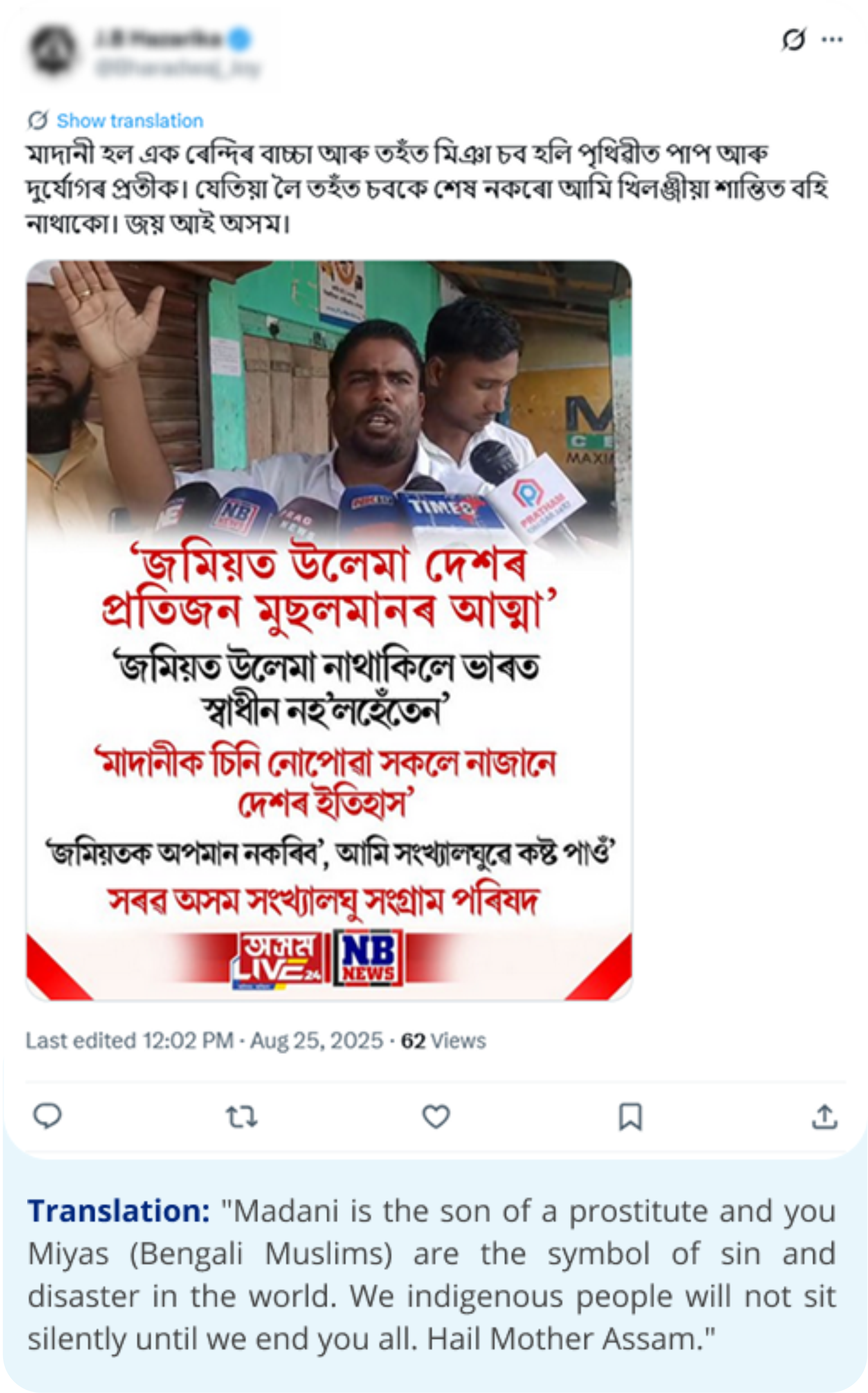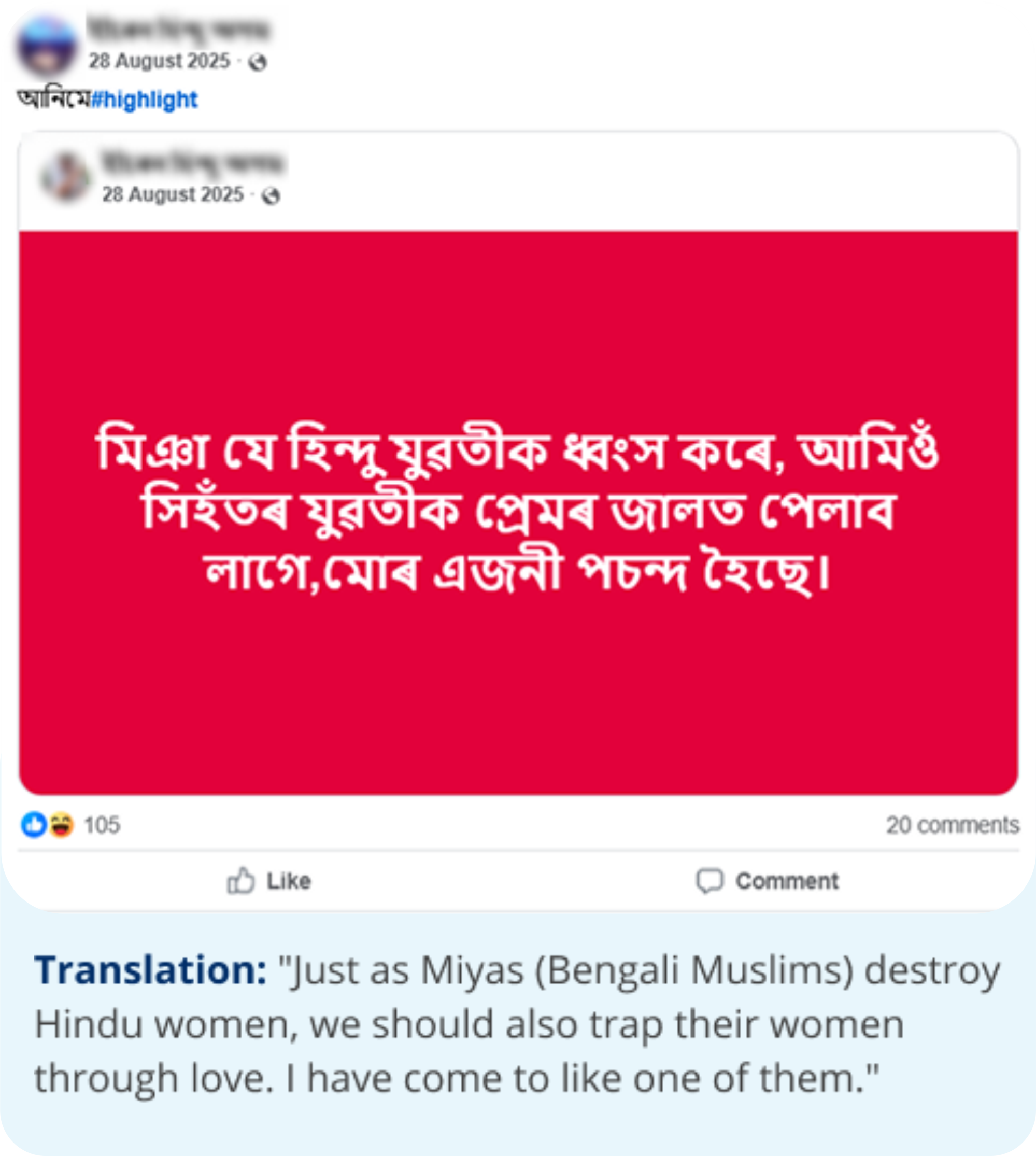
Miya is a derogatory slur used in India’s Assam state to target Bengali-origin Muslims, branding them as illegal immigrants, outsiders, or culturally inferior. The term portrays Bengali Muslims as foreigners from Bangladesh, framing them as demographic and cultural threats to Assam’s indigenous population. Its use denies these communities citizenship, belonging, and legitimacy within the Assamese and Indian national identity.
Background and Context
The term miya has historically been used as a respectful honorific in Urdu, equivalent to “sir” or “gentleman.” However, in contemporary India, particularly in Assam and other northeastern states, it has been remade as an ethnic slur directed exclusively at Bengali-origin Muslims. This shift is rooted in decades of anti-Muslim and xenophobic sentiment in the region. Bengali-origin Muslims, many of whom have lived in the region for generations, are frequently labeled as miya in a pejorative manner to question their citizenship, loyalty, cultural identity, and right to live in Assam.
The term finds use amongst Assamese nationalist groups, political leaders, Hindu far-right organizations, and their supporters, as well as affiliated online ecosystems at large, to vilify Bengali-origin Muslims, portraying them as a threat to Assamese culture and parasitic upon the state’s resources. It frequently appears in hate speech at Hindu far-right rallies, in social media abuse, and in media narratives that frame Bengali-origin Muslims as Bangladeshis or infiltrators.
Impact and Harm
The slur miya operates as a tool of ethno-religious exclusion. It dehumanizes Bengali-origin Muslims, erasing their historical presence and citizenship claims, while legitimizing their marginalization and persecution. Its use sustains structural discrimination, social ostracization, and periodic violence against Bengali Muslims, reinforcing a system in which their very belonging is continuously contested.
Variants and Alternative Forms
Miya Muslim মিয়া, মিঞা, मिया मिया मुसलमान
Online Usage