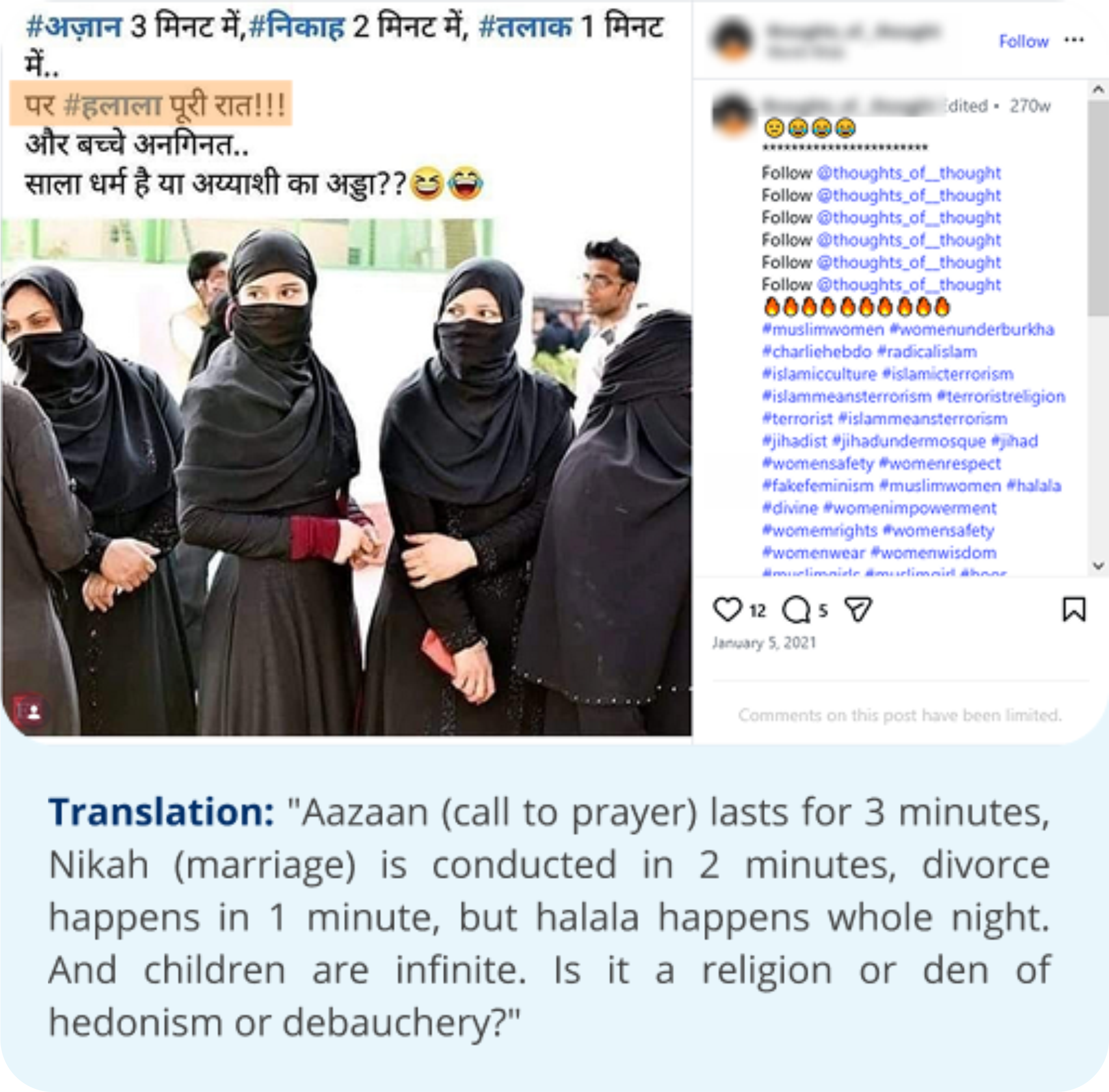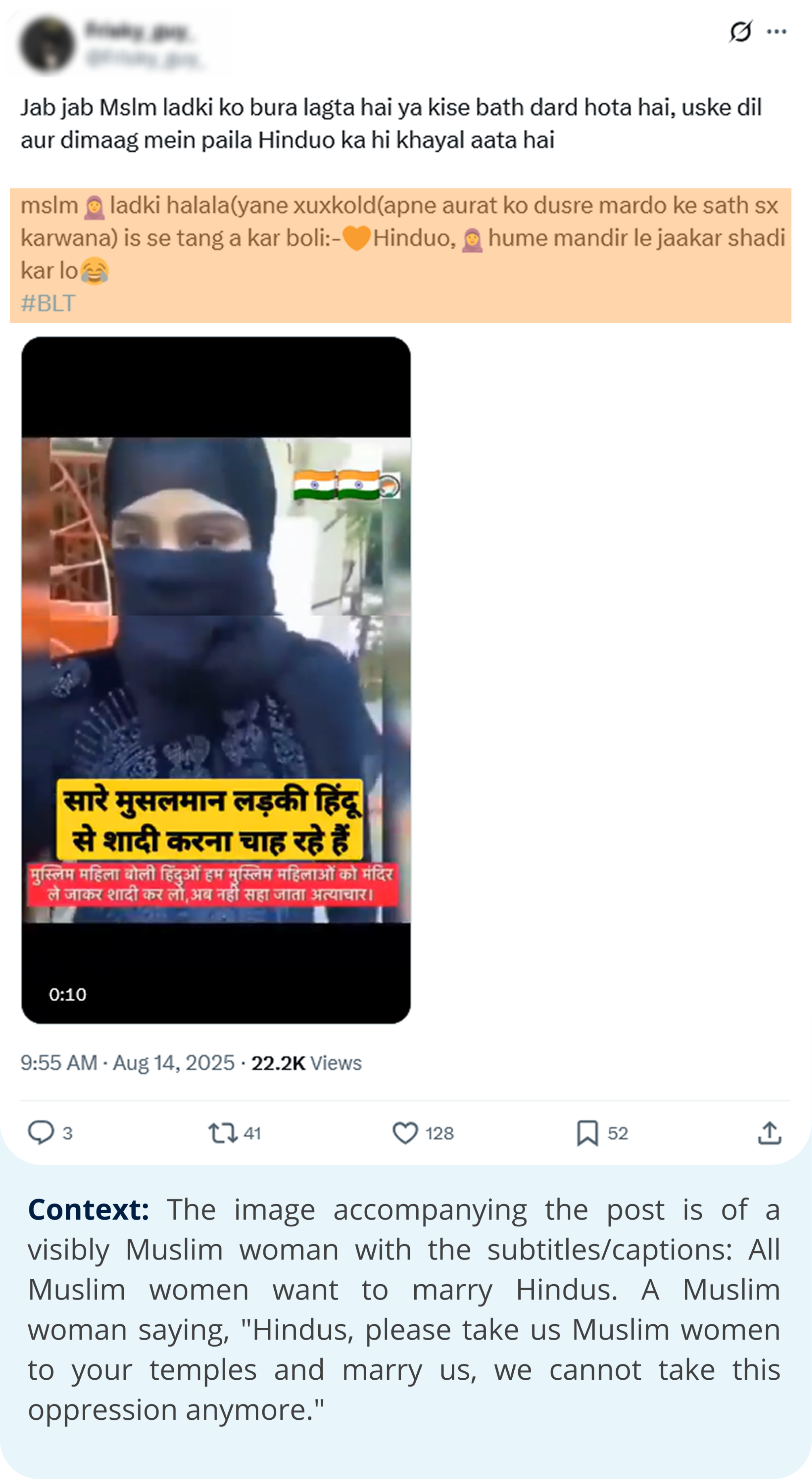
Halala is a shortened version of “Nikah halala,” the colloquial term to describe a tahleel marriage. Derived from the Arabic word meaning “to make lawful,” a tahleel marriage refers to a woman marrying another man to make it permissible to remarry her first husband after a triple divorce — though this is not, in fact, an accepted practice in Islam. The practice is rooted in certain interpretations of Islamic law, which have been weaponized in far-right discourse to demean and target Muslims, especially Muslim women.
Background and Context
Nikah halala — nikah being the Arabic word for “marriage” and halala being loosely related to halal, referring to something made permissible — refers to a situation where a woman, after being divorced irrevocably (i.e., through triple talaq/repudiation), cannot remarry her former husband unless she first marries another man, consummates that marriage, and is then divorced by the second husband.
Though it is rarely practiced and its legitimacy is widely debated, with many Muslim scholars rejecting it as outdated or subject to misuse, far-right groups, leaders, and online trolls often exaggerate its prevalence to depict Islam as regressive and inherently oppressive toward women. Terms like “halala rape” are routinely used in far-right discourse to demean and demonize Muslims.
Impact and Harm
The term vilifies an entire community by insinuating that all Muslims are born of halala. Far-right actors invoke it to belittle Muslim women by portraying them as helpless victims of a perverse religious practice, while simultaneously depicting Muslim men as sexually exploitative. It reinforces the stereotype that Islam endorses forced sexual relations and, by fixating on this rare and contested practice, casts all Islamic marriage practices as suspect and degrading, extending suspicion to every Muslim marriage and family structure as inherently perverted or abusive.
Variants and Alternative Forms
हलाला हलाला की पैदाईश
Online Usage