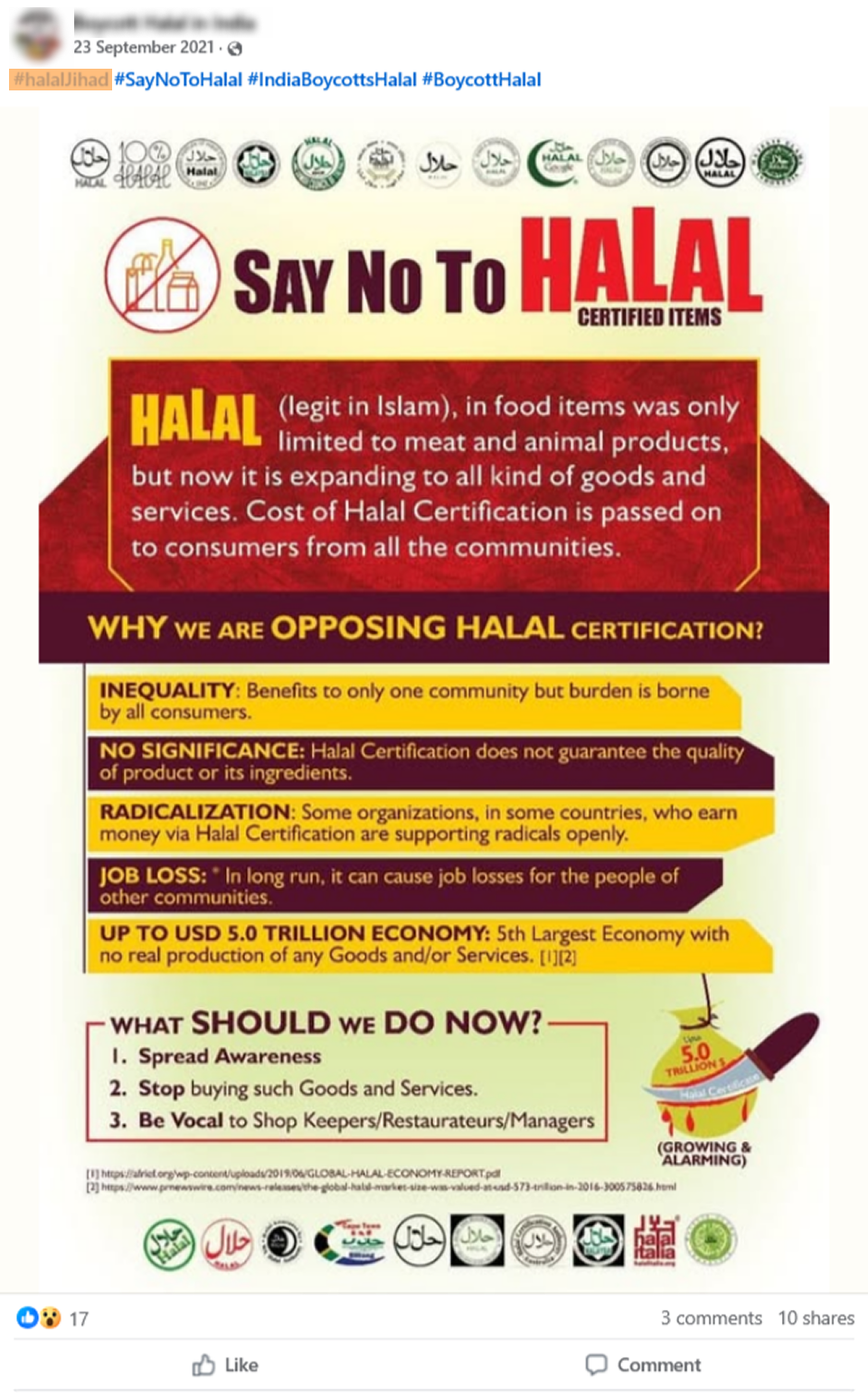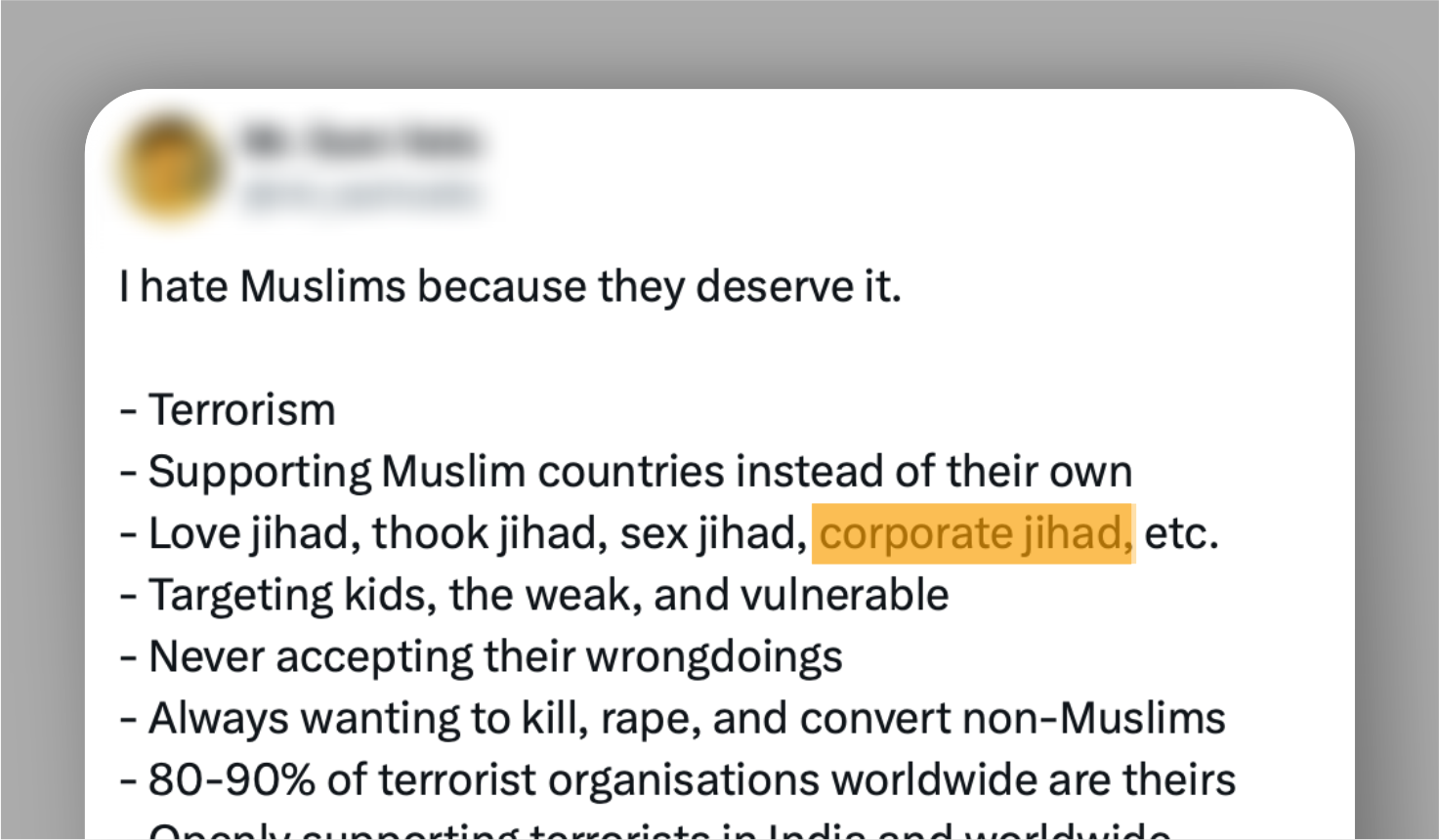
Halal Jihad conspiracy theory claims that Muslims use halal certification to impose Islamic practices and Sharia law in India, while allegedly “contaminating” food consumed by Hindus. A core element of this false narrative is the baseless assertion that profits from halal-certified products are diverted to finance terrorism.
Background and Context
In India, halal certification, in essence, merely accommodates the choices of some Muslim consumers and facilitates exports to Muslim-majority markets. Hindu nationalist conspiracists distort this legitimate process by reframing it as a scheme to impose Islamic dietary norms and economically empower Muslim businesses. They further claim that profits from halal-certified products fund terrorist networks. Despite halal certification being overseen by independent or government-recognized bodies, the Halal Jihad narrative has fueled boycotts of halal goods and pressured businesses to avoid certification, contributing to wider economic campaigns that target Muslim traders.
Impact and Harm
This conspiracy theory has spawned coordinated boycott campaigns, often amplified on social media, urging Hindu consumers to shun halal-certified goods and Muslim-owned stores. These movements have pressured manufacturers, retailers, and food-service providers to strip halal labels or abandon certification altogether, harming both Muslim businesses of their livelihood and consumers to exercise dietary restrictions. The theory has also found resonance among sections of the Indian diaspora.
Variants and Alternative Forms
हलाल जिहाद
Online Usage