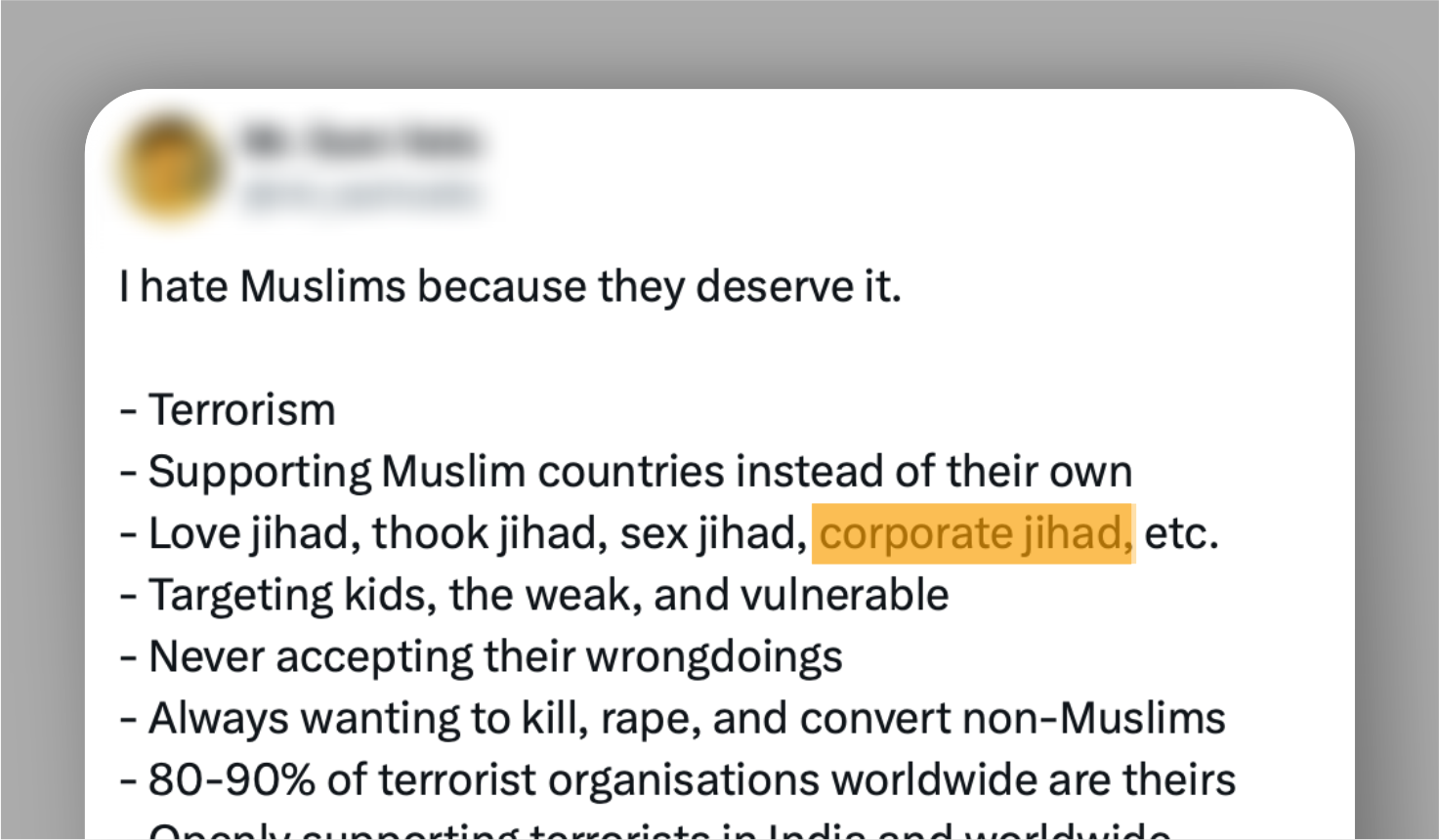
Economic Jihad is a conspiracy theory alleging that Muslim vendors and business owners conceal their religious identity to deceive non-Muslim customers into purchasing their goods. Proponents cast everyday commerce as part of a covert strategy in which Muslims use economic success as a stepping-stone to establish social dominance and political control.
Background and Context
Advocates of the theory insist that Muslim-owned businesses, ranging from meat exports to leatherwork and small-scale trade, harbor a hidden agenda to monopolize markets and undercut Hindu businesses. This baseless conspiracy has fueled organized boycott campaigns, spreading rapidly across social media platforms through claims that Muslims exclusively patronize Muslim traders while boycotting non-Muslim businesses.
Such narratives have led to the exclusion of Muslims from key local markets and the denial of commercial opportunities during religious festivals, deepening economic and social segregation and compounding the community’s longstanding economic marginalization.
Impact and Harm
This theory cuts Muslim community members off from vital markets and income streams, driving many into deeper poverty. It inflames social distrust and normalizes discrimination, making it easier to justify violence, harassment, and exclusion. It has also served as a pretext for systematically targeting Muslim vendors through organized boycotts. Over time, these pressures erode economic resilience, fracture social cohesion, and heighten the community’s vulnerability to exploitation and marginalization.
Variants and Alternative Forms
Business Jihad व्यापार जिहाद आर्थिक जिहाद
Online Usage