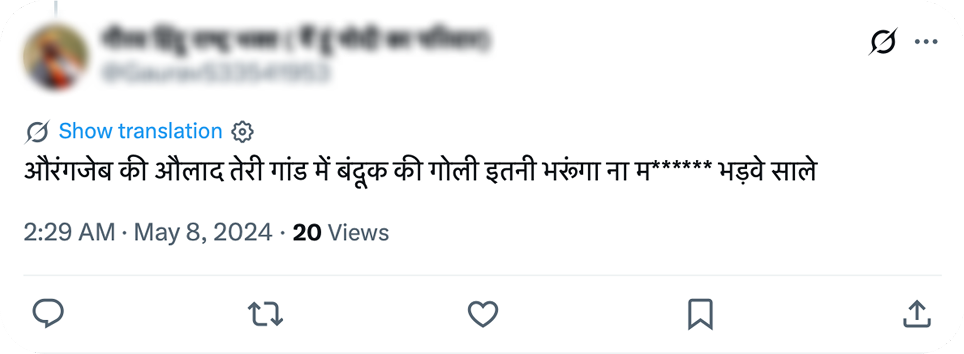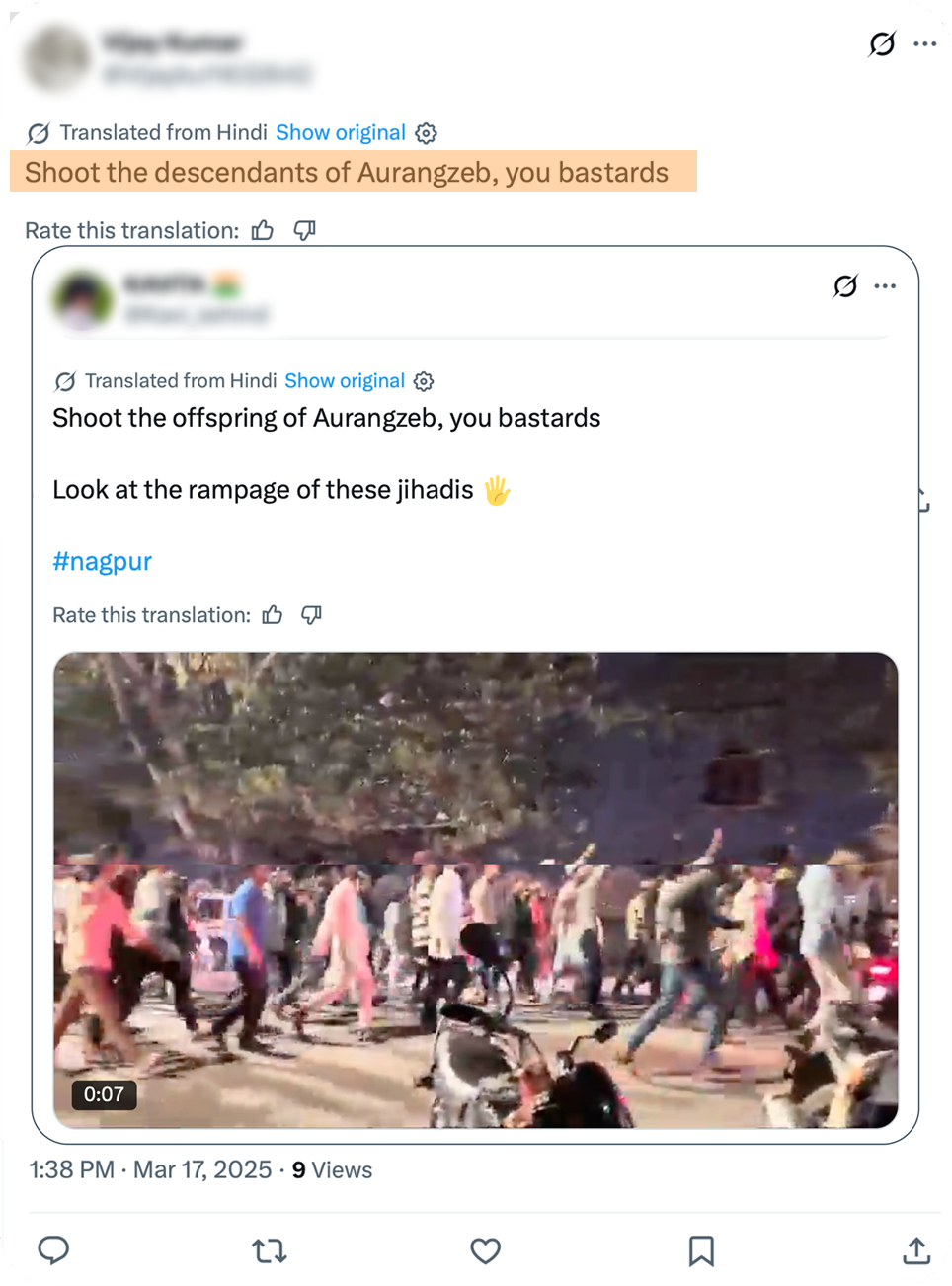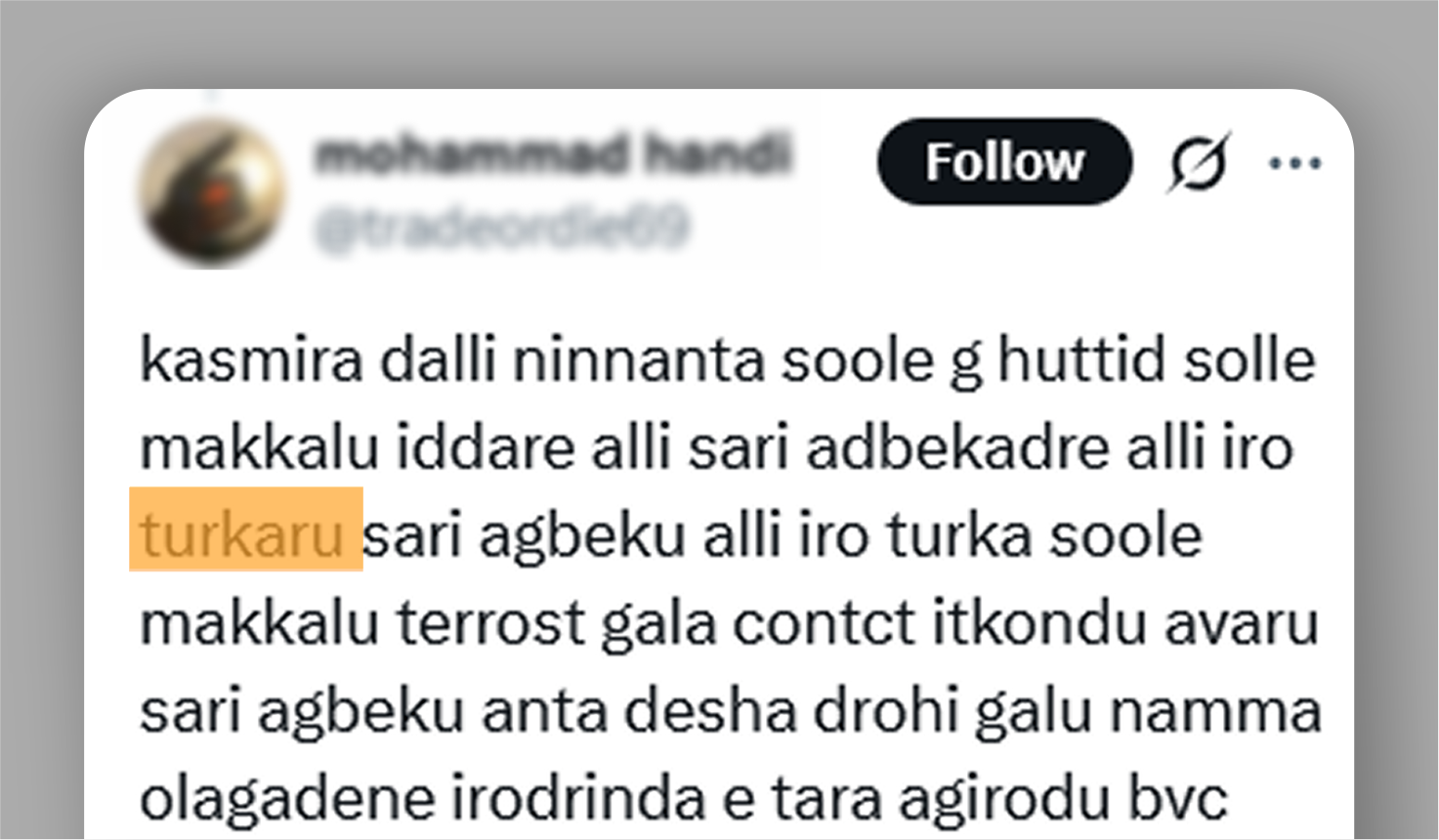
“Babar ki aulad” (“child of Babur”) and “Aurangzeb ki aulad” (“child of Aurangzeb”) are derogatory phrases used to depict Indian Muslims as descendants of foreign invaders, suggesting they are outsiders with no legitimate claim to India’s citizenship, heritage, or national identity.
Background and Context
The slurs originated in Hindu nationalist discourse to draw a link between contemporary Indian Muslims and the Mughal emperors Babur and Aurangzeb, who are portrayed as foreign invaders and oppressors. They gained wide circulation during the Ram Temple-Babri Mosque movement of the 1980s and 1990s, when Babur was cast as the destroyer of a Hindu temple and Aurangzeb as a symbol of Islamic tyranny. Today, the phrases are widely invoked in hate speeches and online discourse to question the patriotism of Indian Muslims and deny their belonging and equal citizenship. A Marathi-language variation is ‘Aurangya.‘”
Impact and Harm
These slurs undermine the identity of Muslims as citizens by framing them as outsiders rather than full and equal members of the national community. This narrative erodes recognition of Islam’s contributions to Indian history and the country’s tradition of religious pluralism. It delegitimizes Indian Muslims’ claim to equal citizenship, fuels anti-Muslim resentment, and has been used to justify discrimination and violence against Muslim communities.
Variants and Alternative Forms
बाबर की औलाद औरंगजेब की औलाद Aurangya
Online Usage