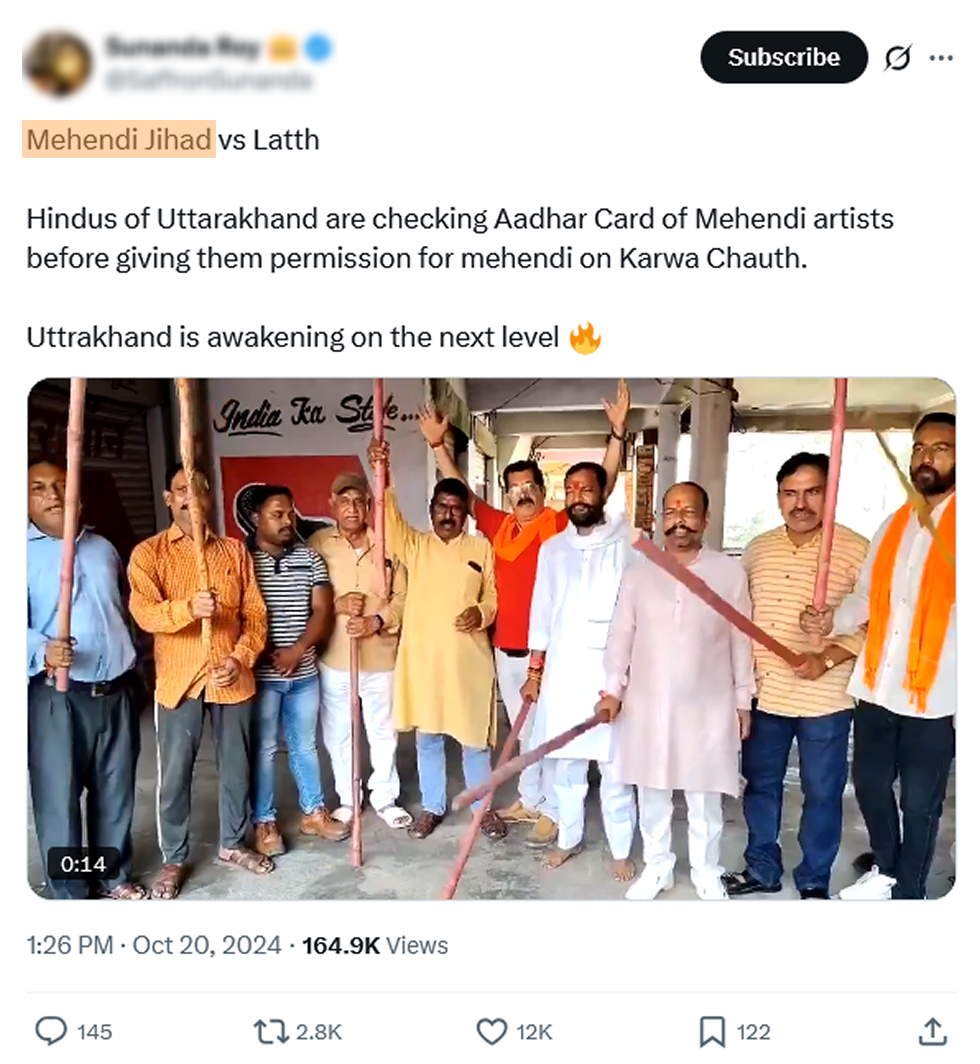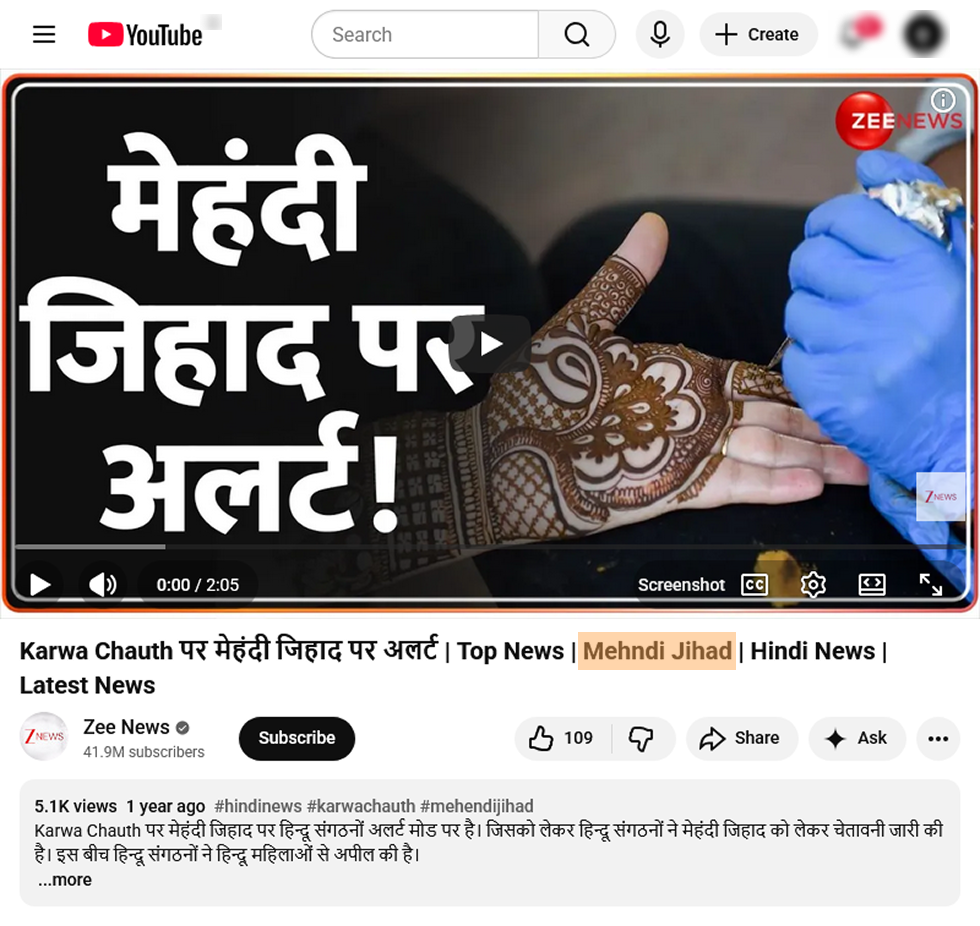
The Mehendi Jihad conspiracy theory accuses Muslim henna artists of deliberately setting up stalls at Hindu festivals and celebrations, such as Karva Chauth or Diwali, to target Hindu women. Proponents of the theory claim that this deception is part of a coordinated Muslim effort — akin to Love Jihad — to lure and convert Hindu women to Islam.
Background and Context
Henna (mehendi), a staining paste used to adorn hands and feet, is a cross-community cultural tradition in South Asia typically practiced at weddings, festivals, and celebrations, largely without religious intent.
Yet the Mehendi Jihad conspiracy theory twists this cultural custom into proof of a covert Islamic plot to seduce Hindu women and convert them to Islam. Hindu nationalist groups such as Kranti Sena and some BJP leaders have repeatedly incited violence against Muslim mehendi artists, barred them from setting up mehendi stalls at events, and organized boycott campaigns against them, exacerbating the economic marginalization of Muslim communities.
Impact and Harm
The theory reinforces harmful stereotypes of Muslims as predatory, exposing them to harassment, violence, and exclusion from social, cultural, and religious events. It also deprives Muslim mehendi artists of economic opportunities.
Variants and Alternative Forms
Henna Jihad मेहंदी जिहाद
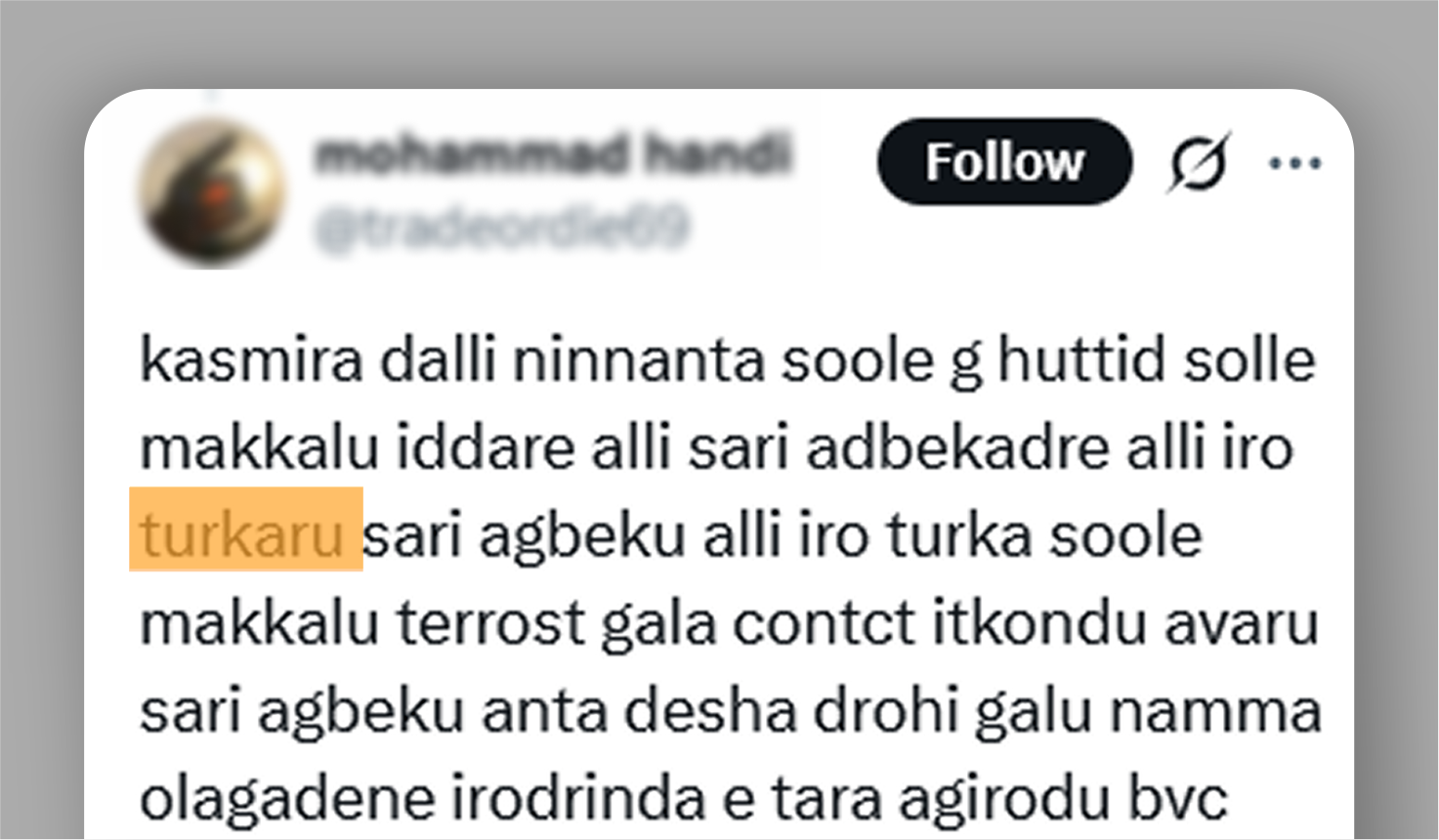
Online Usage